

AFCI vs. GFCI vs. Dual Function Breakers: What's the Difference?
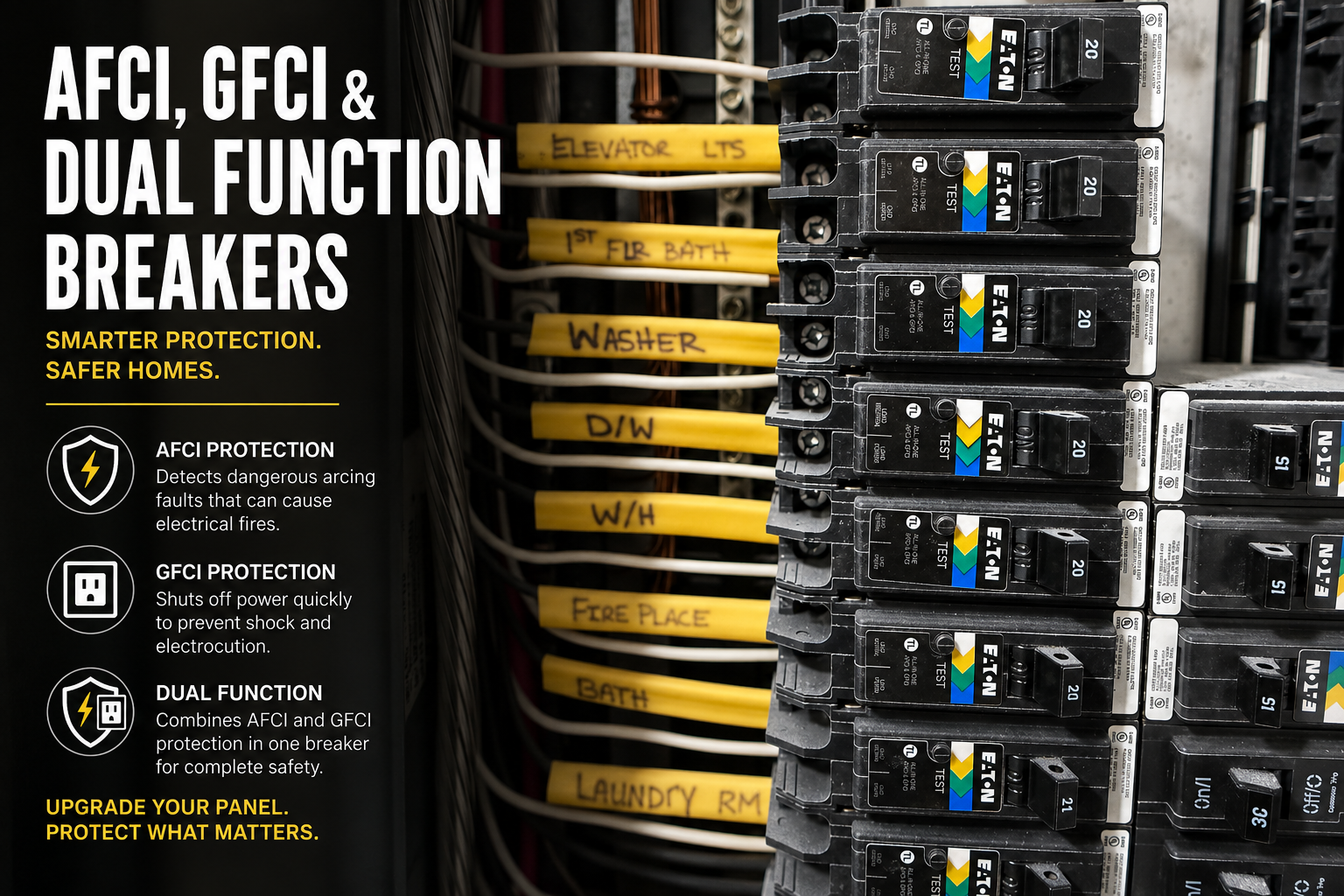
If you've looked inside your electrical panel recently, you may have noticed some breakers have a TEST button while others don't. You might also hear electricians mention AFCI, GFCI, or Dual Function breakers.
So what do these breakers actually do, and why are they important?
While a standard breaker protects your wiring from overheating due to an overload or short circuit, AFCI and GFCI breakers are designed to provide additional safety for your home and your family.
Let's break down the differences in simple terms.
What Does a Standard Breaker Do?
Every home has standard circuit breakers. Their primary job is to protect the wiring in your home from carrying too much electricity. If too many devices are plugged into one circuit or a short circuit occurs, the breaker trips to prevent the wires from overheating. Think of it as protecting your home's electrical system. However, standard breakers don't detect every electrical hazard. That's where AFCI and GFCI breakers come in.
What Is an AFCI Breaker?
AFCI stands for Arc Fault Circuit Interrupter. An AFCI breaker is designed to detect dangerous electrical arcing. An electrical arc is a spark that occurs when electricity jumps between damaged or loose wiring. These small arcs can generate enough heat to ignite wood, insulation, or other building materials hidden inside your walls.
Common causes of arc faults include:
Loose wire connections
Damaged electrical cords
Nails or screws driven into wiring
Aging electrical wiring
Worn receptacles or switches
Damaged appliances
Because these problems often happen inside walls where homeowners can't see them, AFCI breakers provide an extra layer of protection against electrical fires.
In simple terms: AFCI breakers help protect your home from electrical fires.
What Is a GFCI Breaker?
GFCI stands for Ground Fault Circuit Interrupter. Instead of looking for electrical arcs, a GFCI breaker looks for electricity flowing somewhere it shouldn't. For example, if you're using a hair dryer near a sink and electricity begins traveling through water—or worse, through a person—the GFCI detects the imbalance and shuts the power off in a fraction of a second. That's why GFCI protection is required in areas where water is commonly present.
Common locations include:
Bathrooms
Kitchens
Laundry rooms
Garages
Outdoor receptacles
Basements
Crawl spaces
Pool and spa equipment
In simple terms: GFCI breakers help protect people from electric shock.
What Is a Dual Function Breaker?
A Dual Function breaker combines both AFCI and GFCI protection into one breaker. Instead of choosing between fire protection and shock protection, you get both.
A Dual Function breaker:
✔ Detects dangerous electrical arcs
✔ Detects ground faults
✔ Trips when either hazard is detected
Many newer homes now use Dual Function breakers because they provide the highest level of protection available for many household circuits.
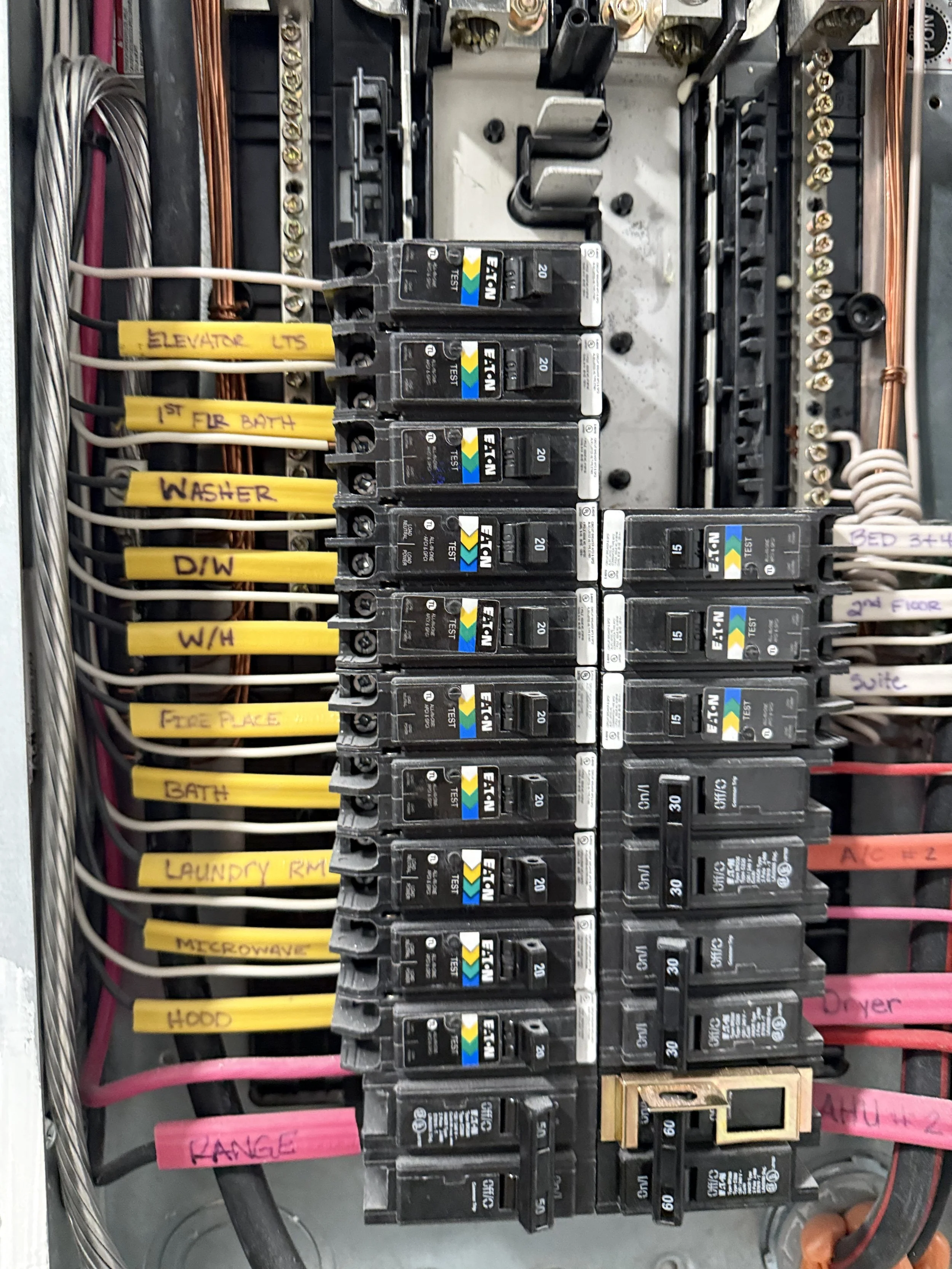
Why Do These Breakers Have a TEST Button?
If your breaker has a TEST button, it's because it contains built-in electronics that constantly monitor the circuit for dangerous conditions.
The TEST button allows you to verify that those safety features are working correctly.
Homeowners should test these breakers occasionally by pressing the TEST button. The breaker should trip immediately and can then be reset.
If it doesn't trip or won't reset, it's a good idea to have it inspected by a licensed electrician.
Do Older Homes Have AFCI or GFCI Protection?
Not always. Many older homes were built before today's electrical safety standards existed. That doesn't necessarily mean your home is unsafe, but newer breaker technology offers protections that simply weren't available years ago.
If you've recently remodeled your home, upgraded your electrical panel, or installed new circuits, you may already have some AFCI, GFCI, or Dual Function breakers.
Should You Upgrade Your Breakers?
Every home is different, and not every panel is compatible with every type of breaker.
If you're unsure what protection your home has, a licensed electrician can inspect your panel and explain:
Which breakers are currently installed
Whether AFCI or GFCI protection is required for your home
Whether your panel can accept upgraded breakers
If a panel replacement would be the better long-term solution
In many cases, upgrading to modern breaker protection is a relatively small investment that can provide significant peace of mind.
Need Help Understanding Your Electrical Panel?
If you're not sure what the breakers in your electrical panel do, you're not alone. Many homeowners never look inside their panel until a breaker trips.
At O'Keefe's Electrical LLC, we're happy to inspect your electrical panel, answer your questions, and explain your options in plain language—without the pressure.
Whether you're upgrading your home, adding an EV charger, or simply want to know your family's electrical system is protected, we're here to help.
Schedule your FREE panel inspection today and let our licensed electricians make sure your home's electrical system is working safely.